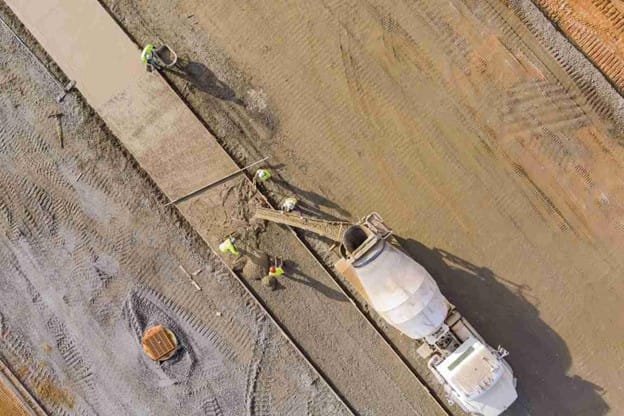
Pouring concrete in the middle of a North Texas summer is a feat of engineering, timing, and local expertise. In Rockwall, Heath, and Royse City, the “dog days of summer” regularly see temperatures soaring past 100°F. For a homeowner looking to upgrade their property, this raises a critical question: Is it safe to pour concrete right now, or will the Texas heat ruin my investment?
At Rockwall Concrete Pros, we’ve spent years mastering the “Blackland Prairie” climate. We know that while the sun is relentless, you don’t have to put your home improvement dreams on hold until October. However, you cannot treat a July pour like a March pour.
In this comprehensive 1,500-word guide, we’ll dive deep into the science of hot-weather concreting, the specific risks of the North Texas environment, and the professional-grade protocols we use to ensure your new Concrete Driveway or Stamped Concrete patio stands the test of time.
The Science of Hydration: Why Heat is the Enemy of Concrete
To understand why summer is risky, you first have to understand that concrete doesn’t “dry” by evaporation. It hardens through a chemical process called hydration. When cement is mixed with water, it creates a crystalline structure that bonds the aggregate together.
When the ambient temperature exceeds 90°F, this chemical reaction goes into overdrive.
The “Flash Set” Risk
In the industry, we call this a “Flash Set.” When the concrete is too hot, the hydration happens so fast that the material begins to stiffen before the crew can properly finish the surface. For decorative projects like a Concrete Patio, this is a disaster, as it prevents the installers from achieving a smooth finish or crisp stamped patterns.
Plastic Shrinkage Cracking
High temperatures, combined with the low humidity and high winds common in Rockwall, cause surface water to evaporate faster than the concrete can bleed water to the top. This results in “plastic shrinkage cracks,” which look like small spiderwebs across your new slab. While they may start as aesthetic issues, they eventually allow water to seep in, leading to structural failure.
The Rockwall Factor: Soil, Wind, and Humidity
North Texas presents a unique set of challenges that differ from even South Texas or the Panhandle.
The Blackland Prairie Clay
Rockwall sits on highly expansive clay soil. This soil acts like a sponge; it shrinks when dry and swells when wet. During a hot summer, this clay is bone-dry and “thirsty.” If a contractor pours wet concrete directly onto dry Rockwall clay, the soil will actually suck the moisture out of the bottom of the concrete slab while the sun sucks it out of the top. This “double-sided dehydration” is the leading cause of slab curling and premature cracking in our area.
The “Oven Effect” of the Wind
In many parts of the country, a breeze is a good thing. In a Rockwall summer, the wind acts like a convection oven. It pulls moisture off the surface of a fresh Foundation or Slab at an alarming rate. According to the American Concrete Institute (ACI 305R), wind speed is often a bigger threat to concrete quality than the temperature itself.
Our “Hot Weather Protocol”: How We Beat the Texas Heat
We don’t just hope for the best; we use a data-driven approach to ensure every pour is successful. Here is the “Rockwall Concrete Pros” standard for summer installations.
1. The 4:00 AM Sunrise Start
The most effective way to beat the heat is to avoid it. During the summer months, our crews often arrive on-site before dawn. By getting the concrete on the ground by 5:00 AM or 6:00 AM, we ensure the “initial set” happens while the temperatures are still in the 70s or low 80s. This gives us a massive head start before the afternoon sun begins its assault.
2. Pre-Soaking the Subgrade
Because of the thirsty clay mentioned earlier, we never pour on dry ground. The evening before a pour, or early that morning, we saturate the subgrade. This ensures the soil is hydrated and won’t rob the concrete of the moisture it needs to cure properly.
3. Chemical Retarders and Chilled Water
We work closely with our ready-mix suppliers to customize the concrete “recipe” for the daily forecast.
- Set Retarders: These are specialized chemicals that slow down the hydration process, giving our finishers an extra 60 to 90 minutes of “workability” time.
- Ice/Chilled Water: For large-scale projects like a full Concrete Driveway Installation, we can request that the batch plant use chilled water or even flaked ice in the mix to lower the concrete’s internal temperature.
Stamped Concrete in the Summer: A Decorative Challenge
If you are looking for Stamped Concrete, summer adds a layer of complexity. Stamping requires the concrete to be in a “plastic” state, not too soft, not too hard.
When it’s 100°F outside, the window of time to get the stamps into the ground is incredibly narrow. If the crew is too slow, the concrete “crusts” over, and the stamps won’t leave a clean impression. We counter this by using larger crews for summer decorative work, ensuring that as soon as the concrete is screeded, the stamps are applied immediately.
If your existing decorative concrete is looking dull due to sun exposure, you might consider Concrete Resurfacing rather than a full replacement. This allows us to apply a new, heat-resistant top layer that refreshes the look of your home without the intensity of a full-depth pour in August.
The Homeowner’s Responsibility: Post-Pour Curing
Once our team finishes the job and pulls away in the truck, the most critical phase of the concrete’s life begins: The Curing Phase. While we handle the technical installation, the homeowner plays a vital role in the success of a summer pour.
The Power of the “Wet Cure”
The best thing you can do for your new concrete in a Texas summer is to keep it wet. We recommend that homeowners lightly mist their new Concrete Walkway or patio with a garden hose 2–3 times a day for the first week.
This process, known as “moist curing,” lowers the temperature of the slab and replenishes water lost to evaporation. Think of it as giving your concrete a cool drink on a hot day. It significantly increases the final strength of the slab and reduces the risk of surface scaling.
Curing Compounds
In cases where a homeowner cannot manually mist the slab, we apply high-performance curing compounds. These act as a liquid “shroud” that seals the moisture inside the concrete, preventing it from escaping.
Frequently Asked Questions about Summer Pours in Rockwall
Q: Does it cost more to pour concrete in the summer?
While the base labor usually remains the same, there may be slight “environmental surcharges” from the concrete plant for things like ice-chilled mixes or chemical retarders. However, this is a small price to pay compared to the cost of a failed slab. For more details on pricing, visit our guide: How Much Does a Concrete Driveway Cost in Rockwall, TX?
Q: Will the heat make my concrete a different color?
High heat can cause “mottling” or uneven coloration as the moisture leaves the slab at different rates. Areas in the shade of your house will cure differently from areas in direct sun. Generally, this evens out over 28 days as the concrete fully matures.
Q: Is summer better or worse than winter for concrete?
In North Texas, summer is actually more predictable than winter. While heat is a challenge we can manage with chemistry and timing, a sudden freeze can ruin fresh concrete instantly. If you are debating between seasons, summer is perfectly fine as long as you hire a pro who knows how to handle it. You can learn more about project timelines here: How Long Does It Take to Install a Concrete Patio?
Why Local Expertise Matters for Your Rockwall Home
You might see “big box” contractors or out-of-town crews offering lower prices, but they often lack the local knowledge of the Rockwall climate. At Rockwall Concrete Pros, we aren’t just contractors; we are your neighbors. We know that a Concrete Sidewalk in Royse City needs to be handled differently than one in a milder climate.
We take every precaution, from analyzing the hourly wind speed to monitoring the “evaporation rate” on-site, to ensure that your investment is protected. We take pride in our work and want your concrete to look as good in twenty years as it does the day we pour it.
Ready to Upgrade Your Property?
Don’t let the Texas sun intimidate you. Whether you need a simple Concrete Driveway repair or a luxurious new backyard oasis, we have the tools and the talent to get it done right, even in 100-degree weather.
Contact Us Today for a free estimate, and let’s discuss how we can make your summer project a success!
Final Verdict: To Pour or Not to Pour?
Can you pour concrete in hot Texas summers? Absolutely. With the right chemical additives, a pre-soaked subgrade, a 5:00 AM start time, and a dedicated curing plan, summer concrete can be just as strong and beautiful as concrete poured in the spring. The key is never to cut corners. If a contractor tells you they don’t need retarders or that they can pour in the middle of a 102-degree afternoon without a plan, they are risking your money.